


Pamba River, India, Asia
- The 176-km-long Pamba River in India starts at Pulachimalai Hill at an altitude of 1650 m and flows into Lake Vembanad. The river flows through a variety of ecosystems, from temperate grasslands to mangroves, passing through deciduous and evergreen forests along the way.
- The riparian flora of the Pamba River is very diverse, while aquatic flora is few in species, including several invasive species. 60 fish species have been recorded in the river.
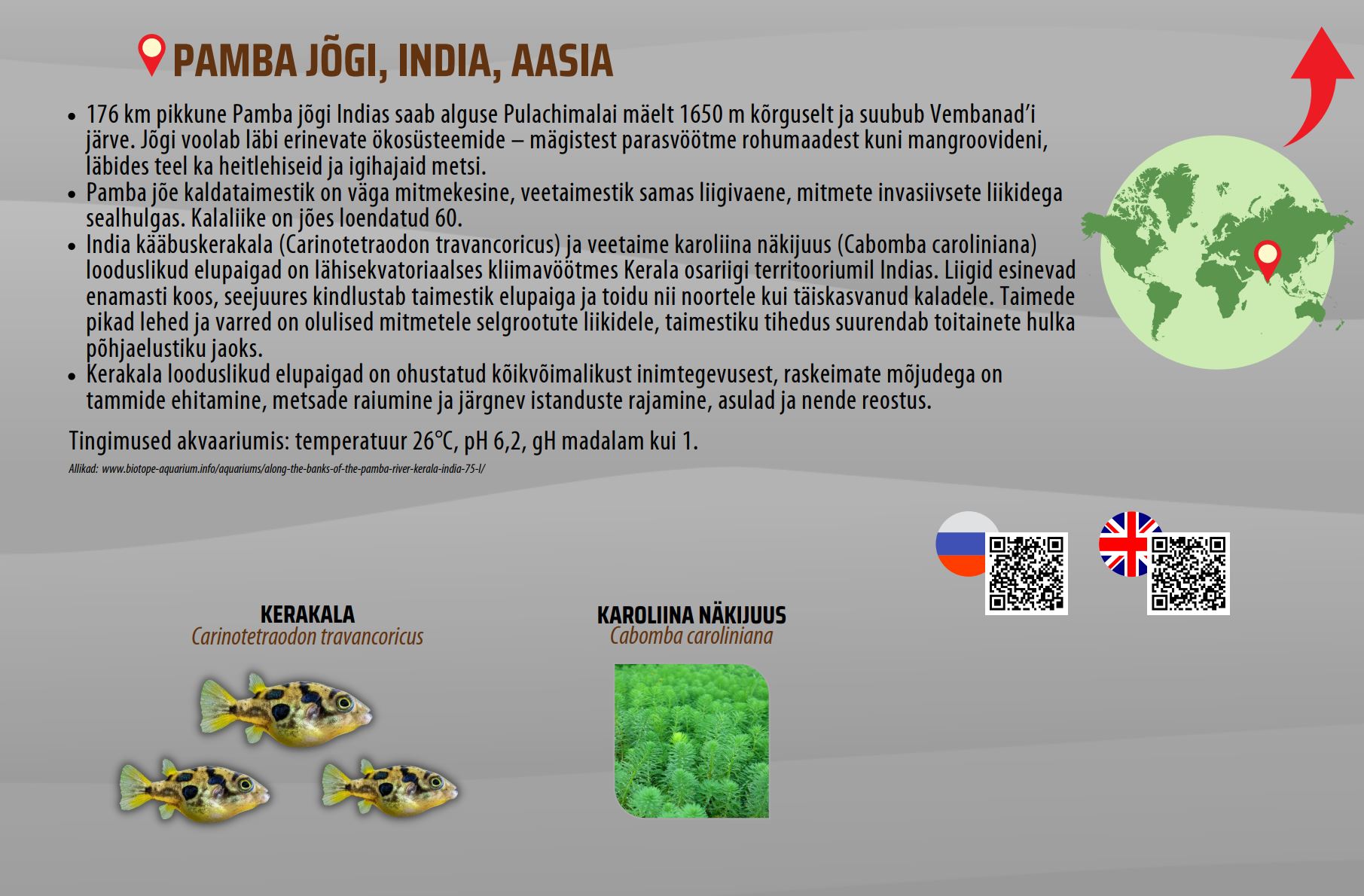
- The natural habitats of the Indian dwarf pufferfish (Carinotetraodon travancoricus) and the aquatic plant Carolina fanwort (Cabomba caroliniana) are in the tropical climate region in the state of Kerala, India. The species mostly co-occur, with the vegetation providing habitat and food for both juvenile and adult fish. The long leaves and stems of the plants are important for many invertebrate species, and the density of the vegetation increases the nutrient supply for benthic organisms.
- The natural habitats of pufferfish are threatened by all kinds of human activities, with the most severe impacts being dam building, deforestation and the subsequent establishment of plantations and settlements and their pollution.
Aquarium conditions: temperature 26°C, pH 6.2, gH lower than 1.
biotope-aquarium.info/aquariums/along-the-banks-of-the-pamba-river-kerala-india-75-l/