


Lake Tanganyika, Tanzania, Africa
- Lake Tanganyika in the East African Rift System is the longest (660 km) and second deepest (1436 m) lake in the world.
- The lake is large and is located in the territory of several countries.
- The lake has many large and small rivers flowing into it, its water is mobile, rich in oxygen and nutrients and has a high pH.
- The lake’s biota varies depending on the depth of the water and the nature of the bottom.
- The aquarium mimics the lakeshores of the Ikola region in Tanzania, which are sandy, sometimes rocky and covered with dense shrubs. There are lots of bird species and many human settlements.
- The depth is shallow, between 1 and 17 metres; the bottom is abundant with stones on sand or rock. Green and brown algae growing on the rocks provide important shelter and spawning sites.
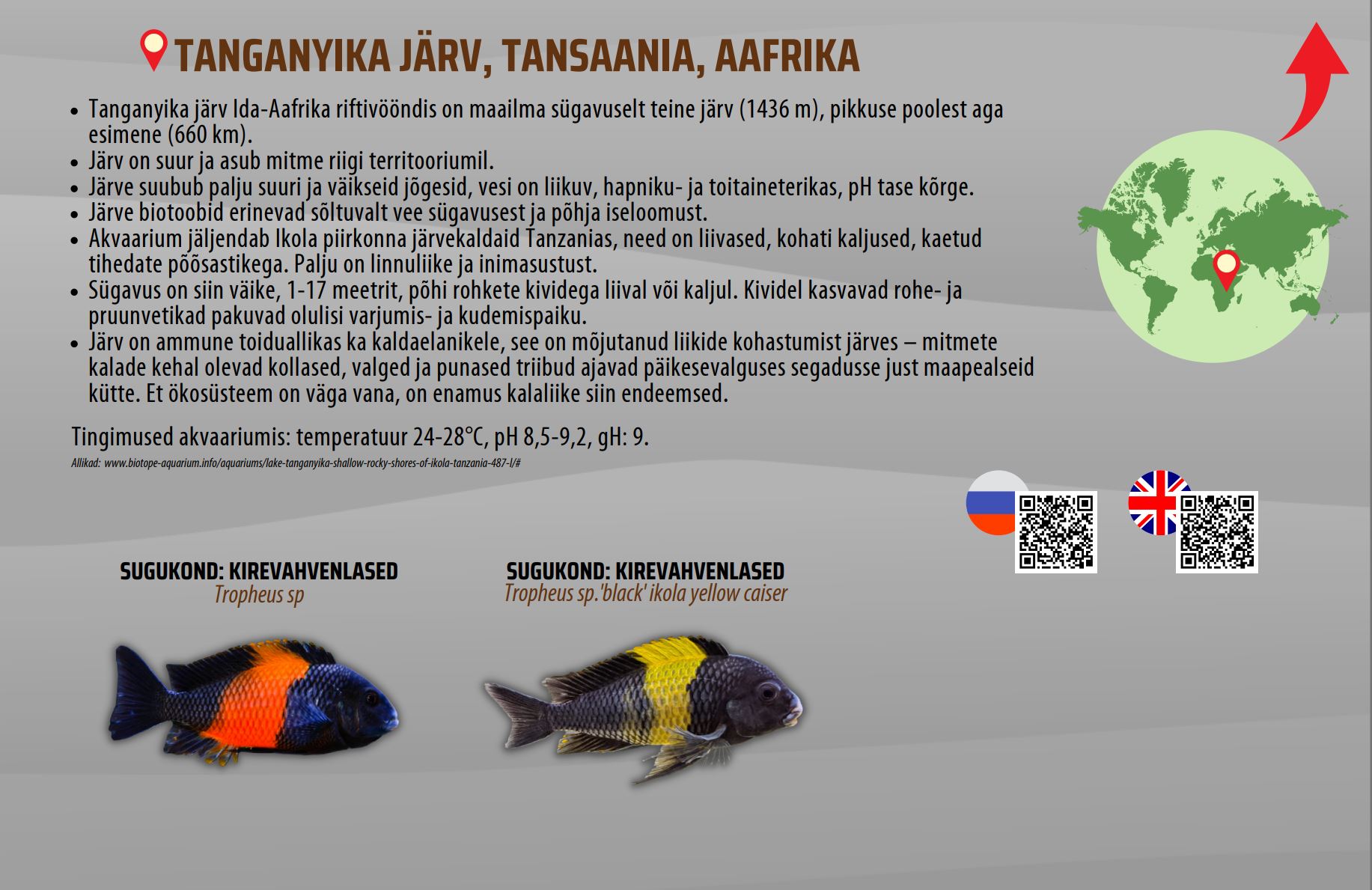
- The lake is also a long-established food source for shore dwellers, which has influenced the adaptation of species in the lake – the yellow, white and red stripes on the bodies of many fish confuse land hunters in the sunlight. As the ecosystem is very old, most fish species are endemic.
Aquarium conditions: temperature 24-28 °C, pH 8.5-9.2, gH 9
biotope-aquarium.info/aquariums/lake-tanganyika-shallow-rocky-shores-of-ikola-tanzania-487-l/#