


Origin.
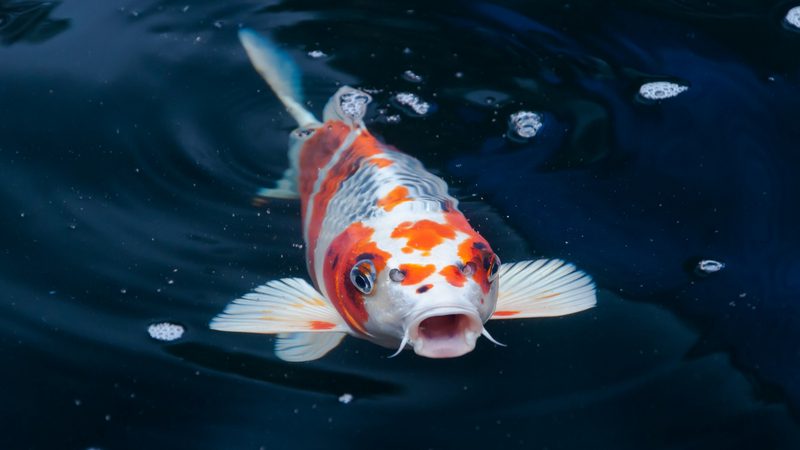
Koi are ornamental fish bred from Amur carp (Cyprinus rubrofuscus) and kept in ponds or aquariums. Around 2500 years ago, carp were brought to China, apparently from the Caspian basin. In 1820s, carp breeding began in the Niigata Prefecture, resulting in a number of koi varieties of different colours, patterns and scale properties. Koi stand for love and friendship in Japanese culture.
Description.
Koi are hardy cold-water fish which benefit from being kept in the range of temperature between 15 °C and 25 °C. Koi can be easily recognised by two pairs of barbs at the mouth, a pair of short ones, and a pair of long ones. As omnivorous fish, koi will eat a broad variety of foods, including peas, lettuce and watermelon. They can reach the length of 40 cm in koi ponds, and the record is held at 120 cm. The size of these fish depends on the space available for swimming. The more space for movement, the larger koi grow. They weigh between 4 and 40, and the oldest koi is reported to have lived for 226 years.
Breeds.
There are more than a hundred koi breeds today. Their main colours are white, black, yellow, blue and cream white. For example, the kohaku variety, translated as ‘red and white’ is a white fish with large red markings, while bekko is white, red or yellow with black markings.
Reproduction.
Keeping koi requires continuous breeding effort: if you do not make the selection and let the koi breed uncontrollably, they will lose their ornamental features and start looking like ordinary Amur carp in several generations. Koi spawn huge amounts of roe, but growing offspring in artificial conditions is rather difficult, and only koi breeders usually do that.
Kohaku

Bekko
